Project Background
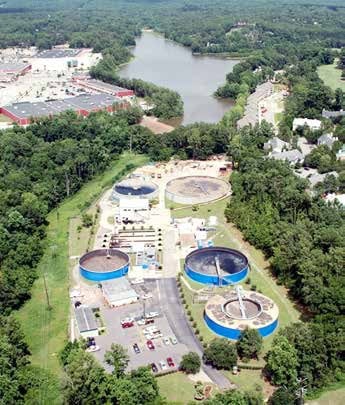
Daphne Utilities, situated on the eastern shore of Mobile Bay in Alabama, provides water, sewer and natural gas service to a population of approximately 25,000. Their Water Reclamation Facility (WRF) treats residential and light commercial wastewater at a peak flow of 9 MGD.
Two independent biological treatment trains (activated sludge systems) are serviced by a common headworks and a TrojanUV disinfection system. Treated wastewater is then discharged by gravity into Blakely River.
During a process review in 2009, the headworks and effluent outfall lines were found to be areas of concern that were preventing the WRF from reaching its permitted capacity of 4.17 MGD. Peak flows were exceeding hydraulic capacities and high influent BOD and TSS concentrations exceeded design and were negatively impacting downstream treatment processes. Sand and trash were making their way through the headworks which plugged and damaged aerators.
Permit compliance was being maintained since flow and ammonia loadings had not yet exceeded design parameters. However, Daphne Utilities knew they had improvements to make. An upgrade project began, starting with staff members and consulting engineers reviewing various equipment options.
Equipment Selection
The foundation of Daphne Utilities centers on providing uninterrupted service to their customers using innovative, efficient and cost effective solutions. As a result, equipment reliability, durability and ease of maintenance were important considerations. Small footprint was also a key factor, as the WRF had space limitations for expansions. Overall, finding a long term solution with the lowest possible cost would help provide the best value to their customers.
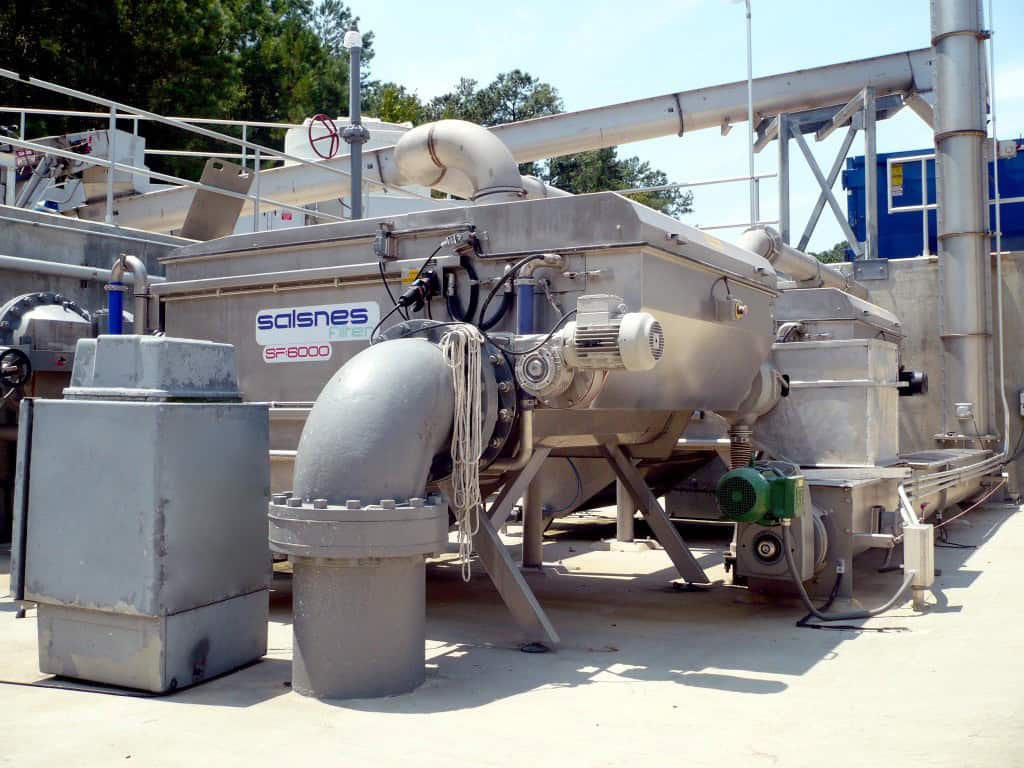
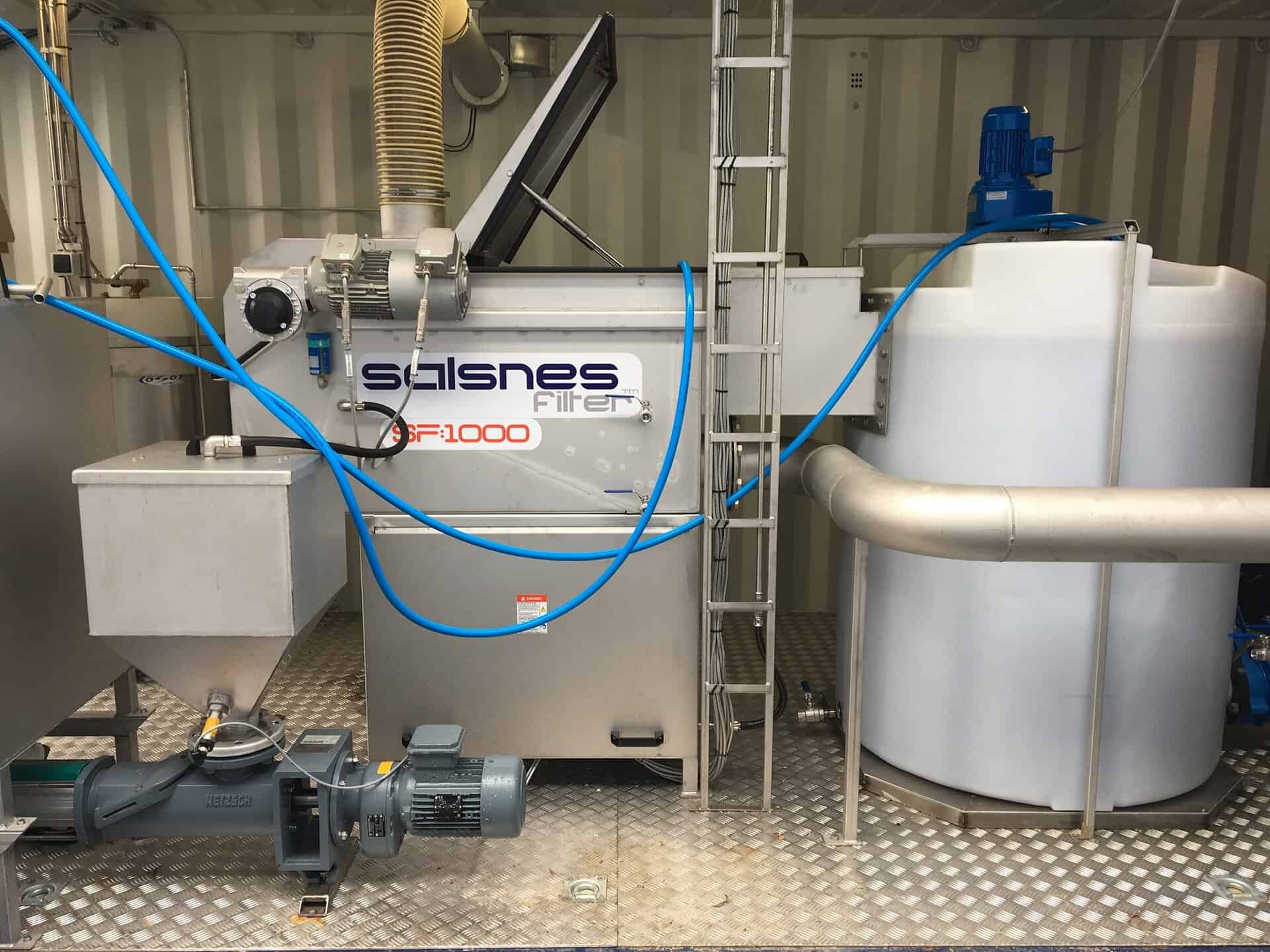
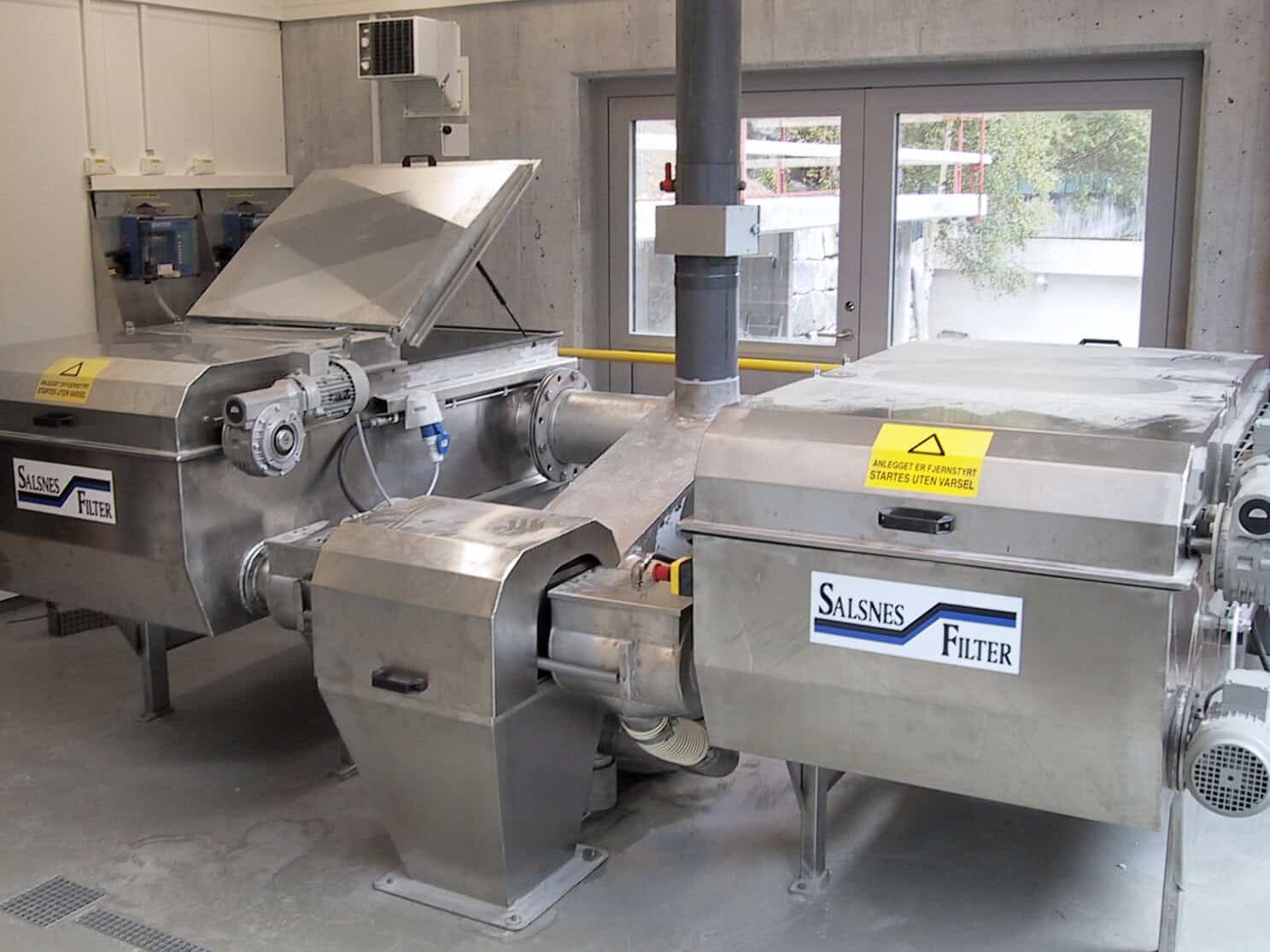
The Salsnes Filter system met their criteria and was piloted for grit removal, solids separation, sludge thickening and dewatering. It proved to be highly effective, delivering significant BOD (30 percent) and TSS (50 percent) reductions in influent loading during normal operating conditions. This outcome reduced total loading back to within original plant design. With these positive pilot results, two SF:6000 Salsnes Filters were added to the upgrade plan.
The Salsnes Filter Solution
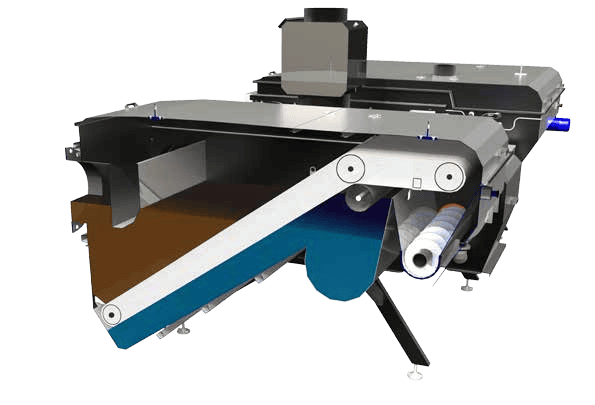
Once installed, their Salsnes Filter system was even more effective than during piloting. Today, BOD loadings are reduced by 30 – 40% and TSS is reduced by 50 – 65%. Sludge is thickened and dewatered within the unit and then transported by screw conveyors into a dumpster. These operations are all automated by a Programmable Logic Controller (PLC). A sensor tells the PLC when to initiate filtermesh rotation which then automatically starts the Air Knife filtermesh cleaning system and sludge dewatering.
The Air Knife cleaning system automatically cleans the rotating filtermesh using a blade of compressed air. Compared to scrapers, brushes or water-based cleaning systems, air is gentler on the mesh to prolong its life and keeps sludge drier for more effective dewatering (Figure 2).
TSS and BOD reductions from the Salsnes Filter have improved the performance of downstream processes. Aerators are virtually trash and sand free which has drastically cut back on maintenance and repairs. It has also eased the demand on blowers which has reduced energy consumption.
Loading reductions have not only restored previously lost capacity but have created surplus capacity. This gained capacity, while not reflected in the current permit, can be utilized in the future to reduce the amount of “new plant construction” required during future upgrades.
Conclusion
The Salsnes Filter system was able to cost-effectively integrate with other complex and innovative systems in the plant upgrade to successfully address the concerns identified in the headworks. It is part of the best long-term solution for Daphne Utilities, designed to meet current and future wastewater lows, loadings, and wet weather flows.
“We are extremely pleased with the performance of our Salsnes Filter system. It has been reliable, easy to maintain and it has significantly reduced TSS and BOD loadings. This has enabled us to recover lost treatment capacity at our facility in a cost effective manner. Another plus is the small footprint of the system which allowed it to easily fit into a very limited space within our plant.”
– Danny Lyndall, General Manager, Daphne Utilities
Quick Facts
Location
Daphne, Alabama, USA
Application
Municipal Wastewater
Population served
~25,000
Peak flow
9 MGD
Filter model
Salsnes Filter SF:6000
Quantity
2 unites
Do you want to know more? Get in touch!
View other case studies
Recovering Lost Treatment Capacity
Faced with rising loads, aging infrastructure and limited space, Daphne Utilities rethought primary treatment to boost capacity, stabilize downstream processes and reduce operational strain—all within...
Optimizing Biogas Production with Primary Sludge
To expand capacity and boost renewable energy output, the Saulekilen WWTP reimagined primary treatment, using advanced solids separation to increase biogas production while staying within...
Recovering Resources from Wastewater at Italy’s SMART-Plant
At the Carbonera Water Resource Recovery Facility, advanced primary treatment increased solids capture, improved downstream efficiency and opened new opportunities for energy and nutrient recovery.
Handling Variations in Incoming Flow
In the heart of a UNESCO World Heritage fjord, the Geiranger WWTP upgraded primary treatment to handle extreme seasonal loads and protect one of Norway’s...
Primary Treatment & Cellulose Recovery
By integrating advanced primary treatment, the Carbonera WRRF increased solids capture and recovered high‑value cellulose, improving plant performance while supporting a circular, resource‑driven approach to...